

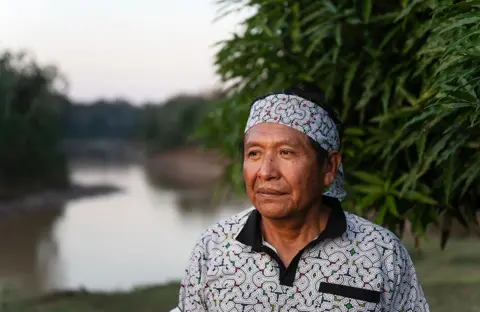
Tomas Anez Dos Santos worked in a tiny open space within in the Peruvian Amazon when he detected movements drawing near through the lush woodland.
It dawned on him that he had been encircled, and stood still.
“One positioned, directing with an projectile,” he remembers. “Unexpectedly he detected of my presence and I commenced to escape.”
He had come face to face the Mashco Piro. For a long time, Tomas—dwelling in the tiny community of Nueva Oceania—was almost a neighbor to these nomadic people, who avoid engagement with foreigners.
A recent document issued by a advocacy organization claims remain a minimum of 196 termed “isolated tribes” left worldwide. The Mashco Piro is thought to be the most numerous. It claims 50% of these communities could be decimated over the coming ten years if governments fail to take additional actions to defend them.
It argues the greatest threats stem from timber harvesting, digging or exploration for oil. Remote communities are extremely susceptible to common disease—as such, it states a risk is posed by exposure with proselytizers and online personalities in pursuit of clicks.
In recent times, the Mashco Piro have been coming to Nueva Oceania with greater frequency, as reported by inhabitants.
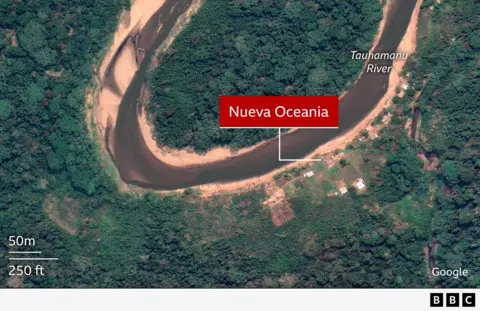
This settlement is a fishing hamlet of several families, perched elevated on the shores of the local river deep within the of Peru rainforest, half a day from the nearest village by watercraft.
The territory is not classified as a protected area for uncontacted groups, and timber firms operate here.
Tomas says that, sometimes, the noise of logging machinery can be heard around the clock, and the community are witnessing their forest disrupted and destroyed.
In Nueva Oceania, inhabitants state they are conflicted. They are afraid of the Mashco Piro's arrows but they also possess deep admiration for their “brothers” dwelling in the forest and desire to defend them.
“Let them live according to their traditions, we can't change their culture. That's why we preserve our separation,” states Tomas.
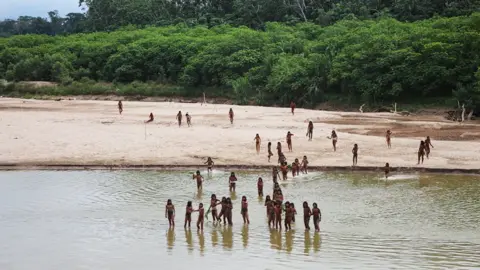
The people in Nueva Oceania are concerned about the damage to the Mascho Piro's livelihood, the risk of violence and the chance that timber workers might introduce the community to diseases they have no immunity to.
While we were in the village, the group made themselves known again. Letitia Rodriguez Lopez, a young mother with a two-year-old child, was in the woodland collecting food when she heard them.
“There were shouting, sounds from people, a large number of them. As though there was a large gathering yelling,” she shared with us.
That was the initial occasion she had come across the Mashco Piro and she fled. Subsequently, her head was persistently pounding from fear.
“Since there are deforestation crews and firms cutting down the jungle they are escaping, possibly out of fear and they end up near us,” she stated. “We are uncertain how they might react to us. That's what scares me.”
Recently, two loggers were attacked by the Mashco Piro while catching fish. One was struck by an bow to the gut. He lived, but the second individual was found lifeless after several days with nine puncture marks in his body.
The administration has a policy of non-contact with remote tribes, establishing it as prohibited to initiate contact with them.
The strategy began in a nearby nation subsequent to prolonged of advocacy by community representatives, who observed that initial exposure with secluded communities could lead to entire communities being wiped out by disease, destitution and starvation.
During the 1980s, when the Nahau tribe in Peru came into contact with the world outside, a significant portion of their population perished within a few years. In the 1990s, the Muruhanua community experienced the same fate.
“Secluded communities are very vulnerable—in terms of health, any exposure may spread diseases, and even the most common illnesses could decimate them,” explains Issrail Aquisse from a local advocacy organization. “In cultural terms, any interaction or disruption could be extremely detrimental to their life and well-being as a society.”
For those living nearby of {


