

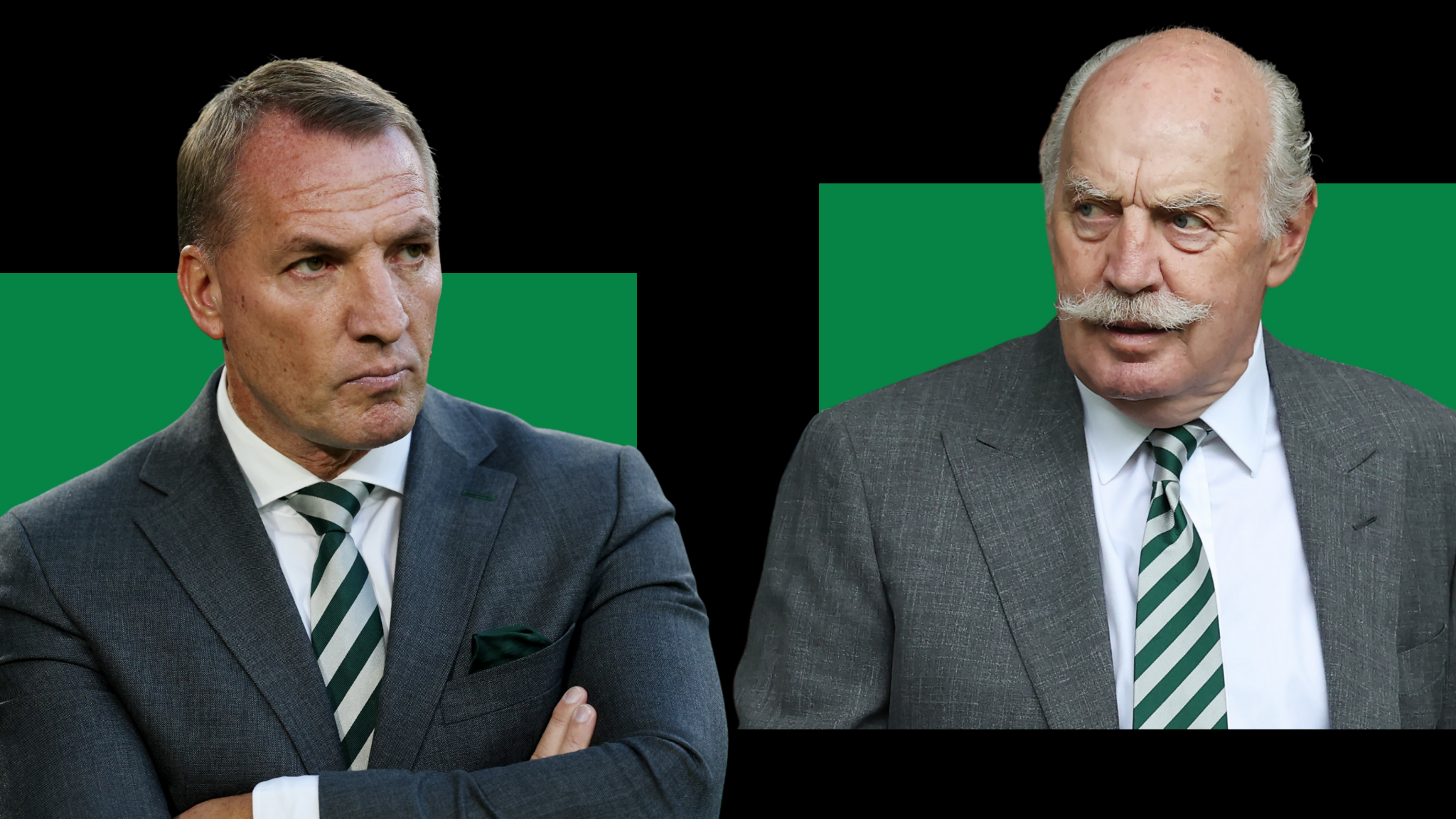
Merely a quarter of an hour after Celtic released the news of their manager's shock resignation via a perfunctory five-paragraph communication, the bombshell arrived, courtesy of the major shareholder, with clear signs in obvious fury.
Through an extensive statement, major shareholder Desmond savaged his old chum.
This individual he persuaded to come to the club when Rangers were gaining ground in that period and required being in their place. And the man he once more relied on after the previous manager left for another club in the recent offseason.
Such was the severity of his takedown, the jaw-dropping comeback of Martin O'Neill was practically an after-thought.
Twenty years after his exit from the club, and after much of his recent life was given over to an continuous circuit of public speaking engagements and the performance of all his past successes at Celtic, Martin O'Neill is returned in the manager's seat.
Currently - and maybe for a while. Considering comments he has said recently, O'Neill has been keen to secure a new position. He will see this role as the perfect opportunity, a present from the club's legacy, a homecoming to the environment where he experienced such glory and praise.
Would he give it up easily? It seems unlikely. Celtic might well make a call to sound out their ex-manager, but the new appointment will serve as a soothing presence for the time being.
All-out Effort at Reputation Destruction'
O'Neill's reappearance - however strange as it may be - can be parked because the biggest shocking development was the harsh way Desmond described the former manager.
It was a forceful endeavor at character assassination, a branding of him as untrustful, a source of untruths, a spreader of misinformation; divisive, deceptive and unacceptable. "A single person's desire for self-interest at the expense of everyone else," stated he.
For a person who values propriety and places great store in dealings being conducted with discretion, if not complete secrecy, this was a further illustration of how unusual things have grown at the club.
Desmond, the club's dominant figure, moves in the margins. The absentee totem, the one with the authority to make all the major decisions he pleases without having the responsibility of explaining them in any public forum.
He does not participate in club AGMs, sending his son, his son, instead. He seldom, if ever, gives interviews about the team unless they're glowing in tone. And still, he's reluctant to speak out.
There have been instances on an rare moment to support the club with private missives to news outlets, but no statement is made in public.
It's exactly how he's wanted it to remain. And it's exactly what he went against when launching full thermonuclear on Rodgers on that day.
The official line from the team is that he resigned, but reading his invective, carefully, you have to wonder why he permit it to get such a critical point?
If the manager is culpable of all of the accusations that Desmond is alleging he's responsible for, then it's fair to inquire why was the manager not dismissed?
He has accused him of spinning information in open forums that did not tally with the facts.
He says his statements "have contributed to a toxic atmosphere around the team and fuelled hostility towards members of the executive team and the directors. Some of the criticism directed at them, and at their families, has been completely unjustified and improper."
Such an extraordinary charge, indeed. Legal representatives might be preparing as we discuss.
'Rodgers' Aspirations Clashed with Celtic's Strategy Again
To return to better times, they were close, the two men. The manager praised Desmond at every turn, expressed gratitude to him whenever possible. Brendan respected Dermot and, really, to no one other.
It was the figure who took the heat when his comeback happened, after the previous manager.
It was the most divisive hiring, the return of the prodigal son for a few or, as some other supporters would have described it, the arrival of the shameless one, who departed in the lurch for Leicester.
The shareholder had Rodgers' support. Over time, the manager employed the charm, delivered the victories and the honors, and an fragile peace with the fans turned into a love-in once more.
There was always - consistently - going to be a point when his ambition came in contact with Celtic's business model, though.
This occurred in his first incarnation and it happened again, with added intensity, recently. Rodgers publicly commented about the slow way the team went about their transfer business, the interminable waiting for prospects to be secured, then missed, as was frequently the case as far as he was concerned.
Time and again he spoke about the need for what he called "agility" in the transfer window. Supporters agreed with him.
Despite the organization spent record amounts of money in a twelve-month period on the expensive one signing, the costly another player and the significant further acquisition - all of whom have performed well so far, with one already having departed - the manager pushed for increased resources and, often, he expressed this in openly.
He set a bomb about a lack of cohesion inside the club and then distanced himself. Upon questioning about his remarks at his next media briefing he would typically minimize it and nearly reverse what he stated.
Lack of cohesion? Not at all, everybody is aligned, he'd say. It appeared like he was playing a dangerous game.
Earlier this year there was a report in a newspaper that allegedly came from a source close to the organization. It claimed that Rodgers was damaging the team with his public outbursts and that his real motivation was orchestrating his departure plan.
He desired not to be present and he was engineering his way out, this was the implication of the story.
Supporters were angered. They then saw him as similar to a martyr who might be carried out on his shield because his board members did not back his plans to bring triumph.
The leak was damaging, of course, and it was meant to harm him, which it did. He demanded for an investigation and for the guilty person to be dismissed. Whether there was a probe then we heard nothing further about it.
By then it was clear the manager was shedding the backing of the people above him.
The frequent {gripes


